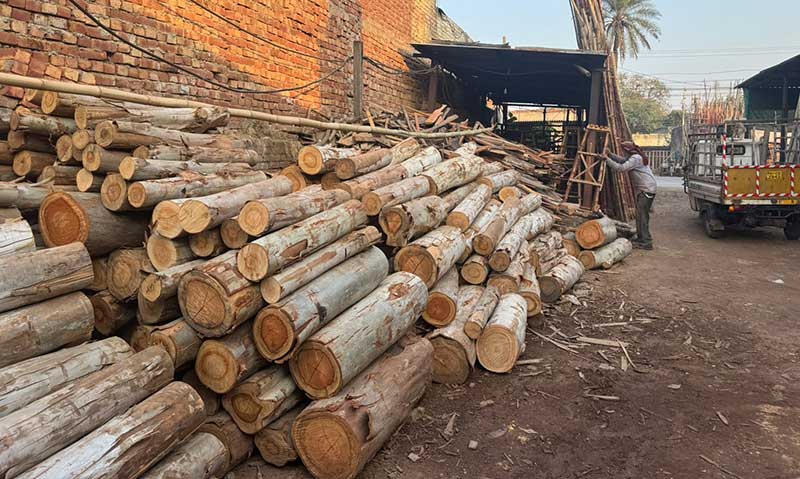
Availability of Forests
Countries with abundant forests export timber; countries with limited resources import wood.
Furniture GradeEconomic Development:
Developed countries often import high-quality or processed wood due to insufficient local supply.
Construction & JoineryTransportation Costs
Timber is bulky; shipping logistics play a big role.
Stable & Cost-effectiveTrade Agreements & Tariffs
Regional trade agreements can encourage or restrict wood trade.
Unique Grain & Finishesmajor challenges in the global wood trade:
The global wood trade faces complex, interrelated challenges: legal, regulatory, environmental, logistical, and market-driven. Success depends on sustainable sourcing, supply chain resilience, value addition, and adaptability to shifting global demand.
Illegal Logging and Traceability Issues
Problem: Wood sourced illegally or mislabelled undermines sustainability and can lead to trade bans.
Impact: Exporters risk losing market access in countries with strict regulations (e.g., EU Timber Regulation, Lacey Act in the U.S.).
Example: Sanctioned wood from Russia and Belarus has reportedly been smuggled into the UK through mislabelling.
Supply Constraints and Resource Scarcity
Problem: Forest degradation, climate change, and overharvesting reduce the availability of high-quality raw wood.
Impact: Supply bottlenecks increase costs and can force importers to find alternative sources.
Example: Some Southeast Asian and African countries have seen declines in log exports due to dwindling forest resources.
Price Volatility
Problem: Wood prices fluctuate due to supply shortages, logistics issues, or sudden demand spikes.
Impact: Importers and exporters face profit instability; project planning becomes harder.
Example: Softwood lumber prices in Europe rose 12% in one year despite minor increases in volume.
Sustainability Pressure
Problem: Consumers and regulators increasingly demand certified, sustainable, and traceable wood.
Impact: Non-compliance can reduce market access and brand reputation.
Trend: Sustainability is becoming a baseline requirement, not just a differentiator.
Competition from Alternative Materials
Problem: Materials like steel, concrete, and composites can substitute for wood in construction or furniture.
Impact: Traditional wood demand may stagnate or decline in some sectors.
Solution: Focus on high-value, engineered, or sustainable wood products that are harder to replace.
Regulatory and Policy Risks
Problem: Export quotas, tariffs, anti-dumping measures, and deforestation laws can abruptly change trade flows.
Impact: Companies may face unexpected costs, legal challenges, or loss of competitiveness.
Example: Tariffs on U.S. lumber imports affected North American exporters, while EU deforestation regulations are influencing sourcing from tropical countries.
Applications
Wood’s applications span construction, furniture, energy, industrial processing, and specialty uses. This versatility is why global wood trade remains robust, with different types of wood targeting distinct market segments—from high-volume structural timber to high-value specialty hardwoods.
Our Sustainability Commitment
Sustainability commitments in the wood trade focus on legal sourcing, deforestation prevention, climate action, circular economy, social responsibility, and traceable supply chains. These measures not only protect forests but also ensure market access, corporate reputation, and long-term viability of the wood industry.Trade Patterns
- North America to Asia/Europe: Softwood lumber, pulp, and paper.
- Southeast Asia & Africa to Europe & USA: Tropical hardwoods for furniture and interior products.
- Russia to Europe & China: Sawn timber, logs, and wood chips.
- Brazil & South America: Hardwood for furniture, plywood, and paper pulp.
Contact Us
Ready to discuss your timber needs? Fill out the form and our team will get back with samples and pricing.
Get Samples & Quotes
Tell us your project requirements and we'll provide material samples, lead time, and competitive pricing.
- +91 +91 95188 52480
- info@harmanwoodworks.com
- Pan-India Supply & Export